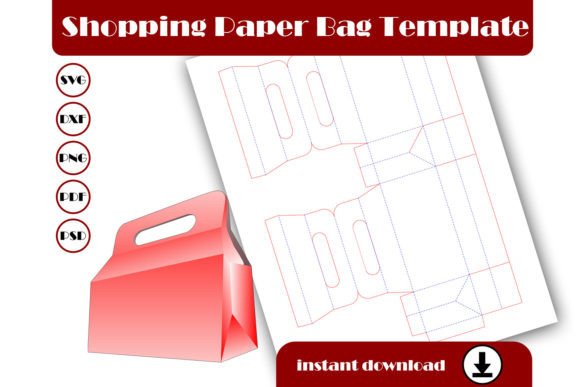
Shopping Paper Bag Template, Paper Bag
The Shopping Paper Bag Template is a versatile tool designed to streamline the creation of custom paper bags. Whether you're a small business owner, a creative professional, or a hobbyist, this template offers a structured approach to designing and producing paper bags that align with your brand or personal style. By providing a blank canvas for customization, it empowers users to bring their vision to life without the need for complex design software or extensive graphic design skills.
This template is particularly useful in scenarios where consistency and efficiency are key. It can be integrated into various workflows, from product development to marketing campaigns, ensuring that every paper bag produced meets specific quality and aesthetic standards. The inclusion of multiple file formats—such as PSD, SVG, PNG, PDF, and DXF—makes it compatible with a wide range of design and cutting tools, enhancing its usability across different platforms and applications.
How the Shopping Paper Bag Template Fits Into Your Workflow
The Shopping Paper Bag Template serves as a foundational element in the process of creating personalized paper bags. It can be used at various stages of a project, from initial planning to final production. Before starting a new project, the template helps you visualize the layout, dimensions, and design elements of your paper bag. This pre-planning phase ensures that you have a clear idea of what you want to achieve, reducing the likelihood of errors or rework later on.
During the design phase, the template acts as a guide, allowing you to experiment with different layouts, fonts, and graphics. Since it includes no logo or image, it provides a clean slate for your creativity. You can easily add your branding, text, or artwork using design software like Photoshop or vector-based tools like Adobe Illustrator. The availability of SVG and DXF files also makes it suitable for use with cutting machines such as Cricut or Silhouette Studio, enabling precise and efficient production.
After the design is finalized, the template can be used to ensure consistency across multiple batches of paper bags. By following the same template, you can maintain uniformity in size, structure, and appearance, which is essential for maintaining brand identity and customer trust. This consistency is especially important for businesses that rely on custom packaging to enhance their brand image and customer experience.
Integration With Other Tools and Resources
The Shopping Paper Bag Template is designed to work seamlessly with a variety of design and production tools. Its compatibility with popular software like Photoshop and Cricut Design Space means that you can leverage existing workflows without needing to learn entirely new systems. This integration allows for a smooth transition from concept to creation, making the entire process more efficient and less time-consuming.
In addition to digital tools, the template can also be used in conjunction with physical resources such as printing materials, cutting tools, and packaging supplies. For example, once you've designed your paper bag using the template, you can print it on high-quality paper or cardstock and then cut it out using a die-cutting machine or manual methods. This flexibility ensures that the template can be adapted to suit different production needs and resource availability.
The template also supports collaboration, as it can be shared with team members, clients, or suppliers for feedback and input. This collaborative aspect is valuable in projects where multiple stakeholders are involved, as it allows for easy revisions and adjustments without the need for extensive rework. By providing a common reference point, the template helps to keep everyone aligned and focused on the end goal.
Practical Implementation Tips
To get the most out of the Shopping Paper Bag Template, it's important to start with a clear understanding of your goals and requirements. Before downloading or using the template, take some time to define the purpose of your paper bags. Are they for retail use, promotional events, or personal projects? Understanding the context will help you make informed decisions about design elements, size, and functionality.
When working with the template, consider the dimensions and specifications of your paper bags. The 8.5×11 sheet size is ideal for standard printing and cutting, but you may need to adjust the layout depending on your specific needs. For example, if you're creating larger bags, you might need to scale the template accordingly or use multiple sheets to accommodate the design. Always test your design on a smaller scale before producing a full batch to ensure that everything looks and functions as intended.
Another tip is to organize your files and assets effectively. Since the template includes multiple file formats, it's a good idea to store them in a dedicated folder or cloud storage system. This organization not only makes it easier to access the files when needed but also helps prevent confusion or loss of important data. Additionally, keeping a backup of your designs and templates can protect against accidental deletion or corruption.
Factors to Consider for Long-Term Use
When using the Shopping Paper Bag Template over an extended period, there are several factors to consider to ensure long-term efficiency and effectiveness. One of the most important is the compatibility of the template with future software updates and hardware changes. While the template is designed to work with current tools, it's a good idea to check for any potential issues that may arise with newer versions of design or cutting software.
Usability is another key factor to consider. As you become more familiar with the template, you may find ways to optimize your workflow or improve the design process. Keeping track of these improvements and updating your templates accordingly can help you stay ahead of the curve and maintain a competitive edge. Additionally, documenting your processes and sharing insights with others can contribute to a more efficient and collaborative environment.
Quality control is also essential when using the template for repeated production. Consistency in design, size, and construction is crucial for maintaining a professional appearance and ensuring customer satisfaction. Regularly reviewing your output and making necessary adjustments can help you identify and address any issues before they become major problems. This proactive approach not only improves the quality of your paper bags but also enhances your overall productivity and efficiency.